|
|
US Nuclear Weapons
- Gravity Bombs
| Warheads | Artillery Shells |
|
Mark-1
|
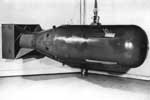 | Date:1945–47 | ~Prod.:6 | Mass:4.4 Tons | Dropcase:300cm X 71cm | Type:Fission | Yield:13-16kt |
Code name 'Little Boy'. Gun-type device utilising 64kg of highly enriched Uranium (HEU). Two subcritical masses of unranium are assembled using a gun barrel. A polonium-beryllium neutron initiator code-named 'Abner' located at the center of the pit, used to kickstart the nuclear chain reaction. Deployed against the Japanese city of Hiroshima 06/08/1945. The first nuclear weapon used in warfare, and the second nuclear explosion in history after the Trinity nuclear test. |Schematic|
|
|
Mark-2
|
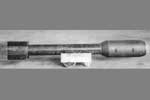 | Date:1944 | Prod.:0 | Mass: □ | Dropcase:520cm X 92cm | Yield: □ |
Code name 'Thin Man'. Proposed plutonium-fueled gun-type device partially developed during the Manhattan Project. The spontaneous fission rate of reactor-bred plutonium was too high for use in a gun-type design due to the high concentration of the isotope plutonium-240. Attempts to overcome predetonation by increasing muzzle velocity were unsuccessful; the design was abandoned in 1944.
|
|
Mark-3/A/B
|
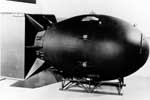 | Date:1945-50 | ~Prod.:140 | Mass:4.67 Tons | Dropcase:520cm X 92cm | Type:Fission | Yield:21 kt |
Code name 'Fat Man'. Implosion device using explosive lenses to compress a 6.2 kg subcritical ball (pit) of plutonium into a fluid supercritical mass. It used a polonium-beryllium neutron initiator code-named 'Urchin'. Deployed against the Japanese city of Nagasaki 06/08/1945 . It is also the most powerful design to ever be used in warfare. Two were used during Operation Crossroads in 1946, three modifications during production and postwar stockpiling. Retired in 1950. |Schematic|
|
|
Mark-4
|
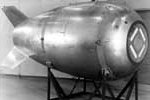 | Date:1949–53 | ~Prod.:550 | Mass:4.9 Tons | Dropcase:330cmX150cm | Type:Fission | Yield:1-31kt |
Pu239/U235 composite (also plutonium or uranium only) core implosion-type weapon based on the earlier Mk-3 Fat Man design. The core used a removable (open-pit) levitated-pit and other design improvements tested during Operation Sandstone 1948. Designed to produce an atomic weapon as a practical piece of mass-produced ordnance. The Mk-4 Mod 0 entered the stockpile 19/03/1949 and was in use until 1953. The Mk-4 Mod 1 used in-flight insertion (IFI) which keeps the nuclear core stored outside the bomb before use. Variable yields of 1, 3.5, 8, 14, 21, 22, and 31 kilotons. Tested during Operation Tumbler 1952.
|
|
Mark-5
|
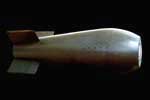 | Date:1952–63 | ~Prod.:140 | Mass: 3–3.2 Tons | Dropcase:112cm X 328–335cm | Type:Fission | Yield:6-120kt |
Used a 92-point fission implosion system and a composite uranium/plutonium fissile core. The Mk-5 bomb and and W5 warhead core assembly were 99 cm in diameter and 193 cm long. Four core designs and eight core capsules, sub-variants with yields of 6, 16, 55, 60, 100, and 120 kilotons. Armed in-flight using a mechanism that inserted the pit into the explosive assembly. Proof tested during Operation Greenhouse and Ranger 1951. TX/W-5 used as the fission primary for Ivy Mike. W5 warhead proposed for the Matador and Regulus 1 cruise missiles.
|
|
Mark-6
|
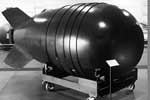 | Date:1951–55 | ~Prod.:1100 | Mass: 3.45–3.86 Tons | Dropcase:330cm X 150cm | Type:Fission | Yield:18-160kt |
Composite uranium and plutonium fission design based on the earlier Mk-4 design, but 25% lighter. Produced from 1951 to 1955, in service until 1962. Seven variants: Mk-3/Mk-4 32-point implosion system; Mk-6 Mod 2 used a 60-point implosion system. Various models and pit options provided yields of 18, 26, 80, 154, and 160 kilotons. Proof tested during Operation Greenhouse 1951.
|
|
Mark-7
|
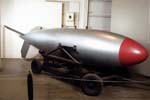 | Date:1952–67 | ~Prod.:1800 | Mass:730kg | Dropcase:462cm X 76cm | Type:Fission | Yield:18-61kt |
Fission weapon using a levitated pit and a 92 point implosion system. Variable yields of 8, 19, 22, 30, 31, and 61 kt depending on the pit used. The first tactical fission bomb, small light aerodynamic drop case designed for high speed low level delivery or 'toss' bombing. Retractable stabilizer fins for use with high-speed fighter-bombers. Airburst and contact fusing modes and automatic in-flight insertion (IFI). Later versions used a PAL A type arming and safing system. Tested during Operation Buster-Jangle in 1951 and Upshot-Knothole 1953. Ten models of the W7 warhead were produced for various delivery systems; the Mk-90 ASW, Honest John and Nike Hercules missile.
|
|
Mark-8
|
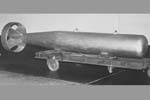 | Date:1951–53 | ~Prod.:40 | Mass:1,480kg | Dropcase:315cm X 37cm | Type:Fission | Yield:25-30kt |
Gun-type fission device using HEU, the Mk-8 was an early earth-penetrating bomb (bunker buster), intended to dig into the earth some distance prior to detonating. Capable of penetrating 6.7 m of reinforced concrete or 13 cm of hardened steel. Produced in two variants: an internally carried Mod 0 with a blunt nose, and a more aerodynamic externally carried Mod 1. Superseded by the Mk-11. W8 warhead used in the Regulus missile.
|
|
Mark-11
|
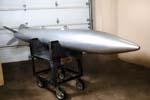 | Date:1956–60 | ~Prod.:40 | Mass:1,650kg | Dropcase:370cm X 36cm | Type:Fission | Yield:25-30kt |
Earth-penetrating gun-type fission device using highly enriched uranium (HEU). Superseding the Mk-8, it had an improved drop case design, variable yields, improved safety features and a 'PHOEBE' polonium neutron initiator that increased core efficiency.
|
|
Mark-12
|
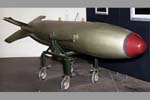 | Date:1954–62 | ~Prod.:40 | Mass:520kg | Dropcase:394cm X 56cm | Type:Fission | Yield:12-14kt |
Smaller and lighter than previous implosion-type nuclear weapons. Compared to the Mk-7, it was 25% thinner and the implosion assembly was 40% smaller despite using the same 92-point implosion assembly, and levitated pit. The first core to use a beryllium tamper. It utilised an automatic in-flight insertion system for safing, in which its nuclear material was kept inside of the weapon itself, but outside of the implosion system. It was inserted by a motor-driven mechanism to arm the weapon. TX-12 (BROK-1) tested during shot Easy of Operation Tumbler-Snapper 1952.
|
|
Mark-13
|
 | Date:1951–53 | Prod.:0 | Mass: 3.3 Tons | Dropcase:320cm X 150cm | Type:Fission | Yield:32kt |
Used the same 92-point implosion system the Mk-6, but weighed slightly less. The design was tested during Operation Upshot–Knothole with test shot Harry 19/05/1953. As it neared production, advances in thermonuclear weapon design rendered the Mk-13 obsolete. Development continued for research purposes, but the Mk-13 proper was never deployed. The Mk-13 bomb and the W13 warhead version were canceled in 1953. Variants of the W13 warhead used in the Redstone ICBM and Snark SSM cruise missile.
|
|
Mark-14
|
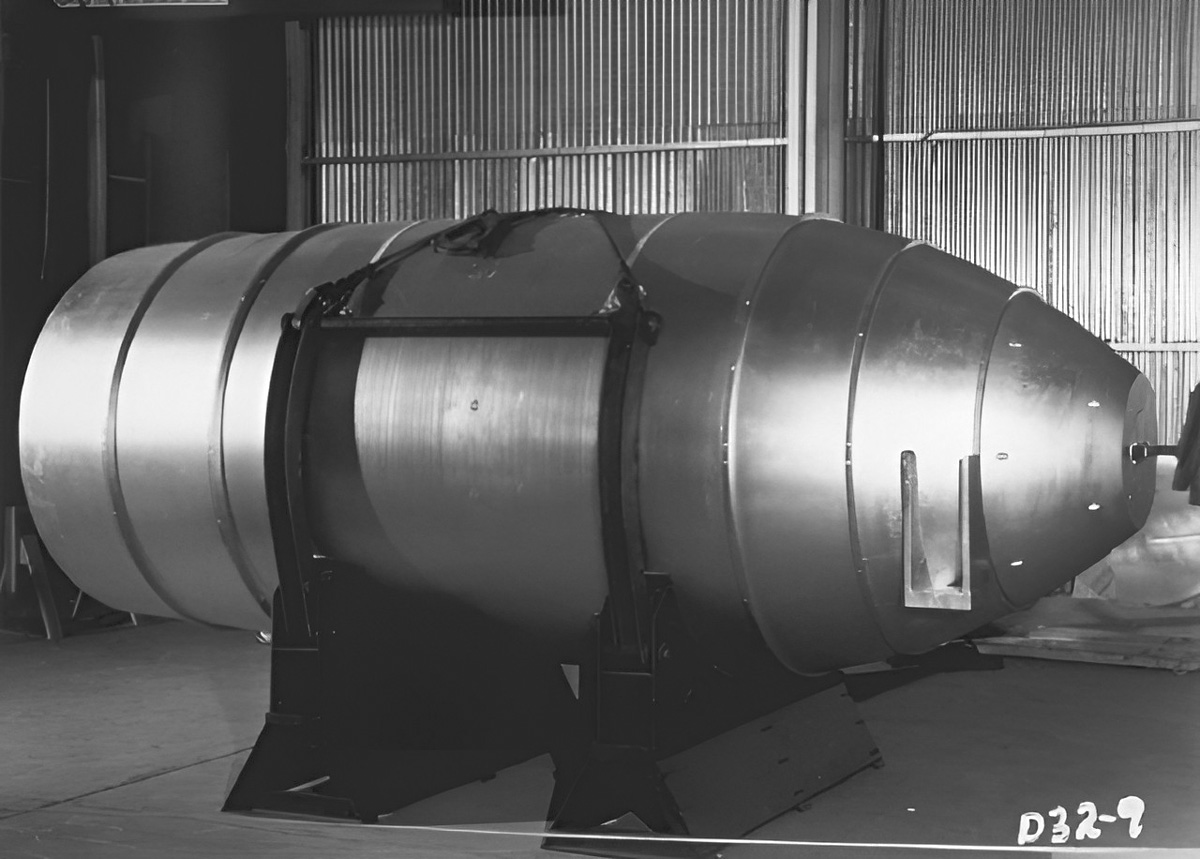 | Date:1954–56 | ~Prod.:5 | Mass:13.5 Tons | Dropcase:564cm X 156cm | Type:TN | Yield:5-7Mt |
A 'dry' fuel thermonuclear weapon that had already been stockpiled by the U.S. as the EC-14. Its secondary consisted of 95% enriched lithium-6 deuteride fuel. The TX/EC-14 had been part of the emergency capability (EC) program to provide a deliverable thermonuclear weapon to cover the period between Ivy Mike in 1952, and the successful testing of both solid and liquid fueled designs in 1954 during Operation Castle.
|
|
Mark-15
|
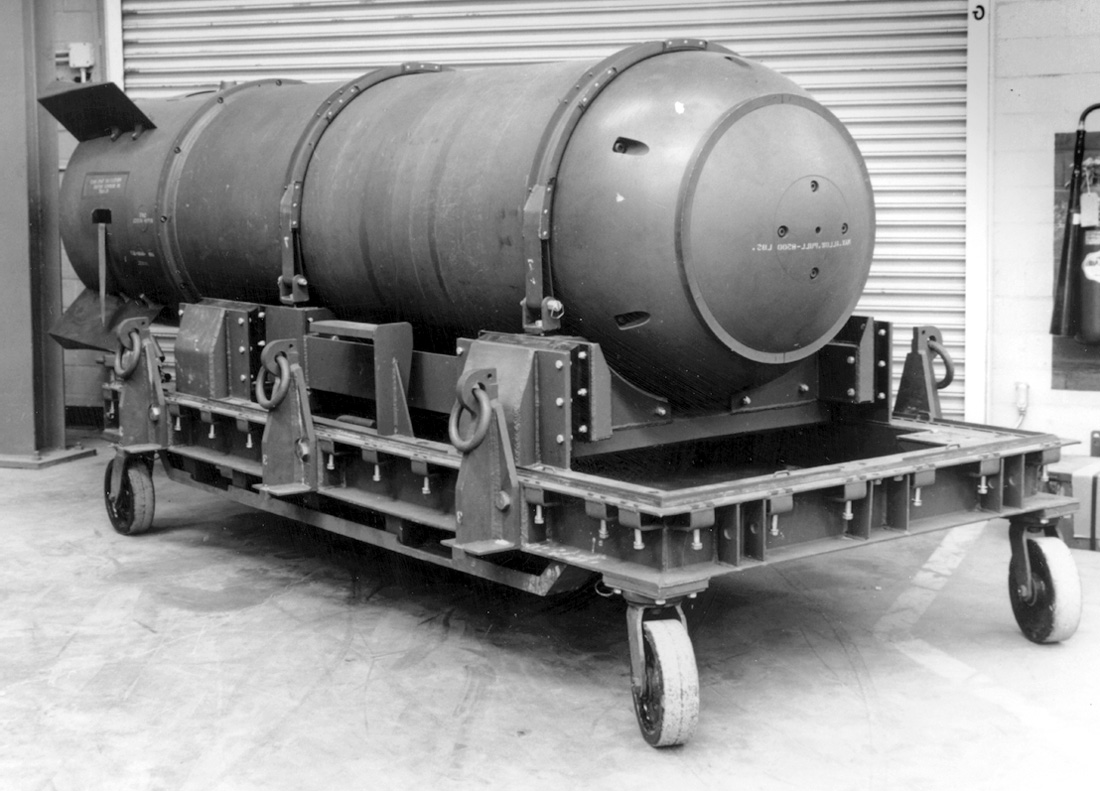 | Date:1955–57 | ~Prod.:1,200 | Mass:3.4
Tons | Dropcase:360cm X 90cm | Type:TN | Yield:1.7–3.8Mt |
| Date:1955–57 | ~Prod.:1,200 | Mass:3.4
Tons | Dropcase:360cm X 90cm | Type:TN | Yield:1.7–3.8Mt |
A radiation imploded fusion-boosted fission bomb. Although most of yield was due to fission, it was fast fission of ordinary uranium (U-238) driven by the fusion-produced neutrons. There were three production variants: Mod 1, Mod 2, and Mod 3. The Mod 1 corresponds to the Operation Castle Nectar test of the Zombie weapon prototype (1.69Mt). The Mod 2 corresponds to the Redwing Cherokee test of the TX-15-X1 test model (3.8Mt). The Mod 3 also appears to have had a 3.8 Mt yield. Cancelled W15 warhead intended the SM-62 Snark SSM cruise missile. |Schematic|
|
|
Mark-16
|
 | Date:1954 | ~Prod.:5 | Mass:20 Tons | Dropcase:754cm X 156cm | Type:TN | Yield:6–8Mt |
Based on the successful design of Ivy Mike, the Mk-16 (properly designated TX-16/EC-16 as it only existed in Experimental/Emergency Capability (EC) versions) was the only deployed thermonuclear bomb to use cryogenic liquid deuterium fusion fuel, requiring elaborate cryogenic systems for use. A small number of EC-16s were produced to provide a stopgap thermonuclear capability without being tested. The TX-16 was scheduled to be tested as the Castle Yankee 'Jughead' device until the overwhelming success of the Castle Bravo 'Shrimp' test device, which showed that 'dry' lithium deuteride fusion fuel could be used for thermonuclear weapons, rendered it obsolete.
|
|
Mark-17
|
 | Date:1954-57 | ~Prod.:200 | Mass:19 Tons | Dropcase:752cm X 156cm | Type:TN | Yield:15Mt |
The Mk-17 and Mk-24 were the first mass-produced hydrogen bombs deployed by the US. The two differed in design of both their primary secondary stages. They both used manual in-flight insertion (IFI) to insert the pit into the implosion assembly. The designs were tested during Operation Castle 1954. The largest nuclear weapons ever deployed by the US (19 tons), with only the Convair B-36 Peacemaker capable of carrying them. Both weapons required a 20m parachute to allow the delivery aircraft to escape.
|
|
Mark-18
|
| Date:1953-56 | ~Prod.:90 | Mass:~3 Tons | Dropcase:~320cm X 150cm | Type:Fission | Yield:500kt |
Derived from the Mk-6 core assembly and drop-case, the 'Super Oralloy Bomb' used an advanced 92-point implosion fission system. Rather than a composite uranium/plutonium fissile pit, it used 60 kg of highly enriched uranium (HEU) in a thin-walled sphere ensuring sub-criticality. Because the core design contained multiple critical masses, it posed significant accidental detonation risks. A neutron absorbing aluminium/boron chain was placed in the core, reducing the risk of accidental detonation, removed during arming. All units were modified into lower-yield Mk-6 variants by 1956 as thermonuclear weapons took over the stockpile. Tested in 1952 during the Ivy King nuclear test.
|
|
Mark-21
|
 | Date:1955-56 | ~Prod.:275 | Mass:8 Tons | Dropcase:~376cm X 148cm | Type:TN | Yield:18Mt |
Thermonuclear gravity bomb based on the TX-21 'Shrimp' prototype during Castle Bravo test 1954. The Mk-21 Y1 variant that entered the stockpile was never tested, the Mk-21 Y2 (TX-21C) was proof tested with shot Navajo of Operation Redwing with a yield of 4.5Mt. The TX-21C was relatively clean, with 95% of its yield produced by fusion. The Mk-21 was half the length and less than half the weight of the Mk-17/24 weapons it replaced. W21 warhead used on the SM-64 Navaho.
|
|
TX-22
|
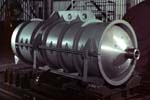 | Date:1954 | ~Prod.:0 | Mass:□ | Dropcase:□ | Type:TN | Yield:1Mt |
The TX-22 ('morningstar') was tested as shot Koon of Operation Castle 1954. The test device 'fizzled' due to premature heating of the secondary producing only 1/10th of its nominal yield. The liquid hydrogen fuelled 'Ramrod' device had the same basic design flaw, that test was canceled and both designs were abandoned.
|
|
Mark-24
|
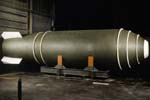 | Date:1954-56 | ~Prod.:105 | Mass:19 Tons | Dropcase:752cm X 156c | Type:TN | Yield:15Mt |
The Mark 17 and Mark 24 were the first mass-produced hydrogen bombs deployed by the US. The two differed in the design of both their secondary and primary stages. They used manual in-flight insertion (IFI) to insert the pit into the implosion assembly. The designs were tested during Operation Castle 1954. The largest nuclear weapons ever deployed by the United States; only the Convair B-36 Peacemaker was capable of carrying them. Both weapons required 20m parachute to allow the delivery aircraft to escape.
|
|
Mark-26
|
| Date:1954 | Prod.:0 | Mass: □ | Dropcase: □ | Type:TN | Yield: □ |
Undeployed 'clean' version of the Mk-21, tested in the Redwing Navajo shot. The Mk-22 design produced less fallout but a smaller yield probably contributed to its developmental termination.
|
|
Mark-28
|
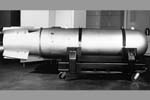 | Date:1955-91 | ~Prod.:4,500 | Mass: Var. | Dropcase: Var. | Type:TN | Yield:35kt-1.45Mt |
Versatile thermonuclear gravity bomb utilising the W28 warhead, built around a 'Python' primary stage. The first weapon designed with an integrated external neutron generator for initiation. Twenty B28 variants, distinguished by their yield, dropcase, core designs and safety features. The B28 used the 'building block' principle, allowing various combinations of components for different aircraft and roles. Five yields: Y1: 1.1Mt, Y2: 350kt, Y3: 70kt, Y4: Fission, Y5: 1.4Mt.
|
|
Mark-36
|
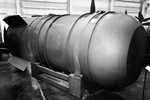 | Date:1957-67 | ~Prod.:920 | Mass:8 Tons | Dropcase:380cm X 150cm | Type:TN | Yield:3-19Mt |
Heavy thermonuclear bombs evolved from the Mk-21. At peak deployment in the late 1950s, they accounted for roughly half of the total megatonnage in the US nuclear stockpile. Two variants: Y1 ('Dirty'): Depleted uranium (U-238) tamper-pusher assembly. The fusion reaction triggered fission in the natural uranium casing, yielding up to 19Mt. Y2 ('Clean') variant: Used an inert lead or tungsten tamper-pusher to suppress secondary fission yielding 6Mt. In 1957, all older Mk-21 bombs were converted to Mk-36 Y1 Mod 1 bombs. Superseded by the B41.
|
|
Mark-39
|
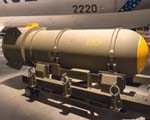 | Date:1957-66 | ~Prod.:700 | Mass:3 Tons | Dropcase:355cm X 89cm | Type:TN | Yield:3.8Mt |
Two-stage radiation-implosion thermonuclear bomb. The Mk-39 was evolved from the Mk-15 physics package. The primary upgrade was a multi-parachute deceleration system. Produced in three variants: Mod 0 - contact and barometric fuses. Mod 1 - Boosted sealed-pit core. Mod 2 - sequential four-parachute tail system. Deployed as the W39 warhead for the SM-62 Snark cruise missile, and PGM-11 Redstone. Experimental TX-39 tested during shot Lacrosse of Operation Redwing in 1956.
|
|
Mark-41
|
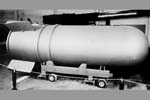 | Date:1960-76 | ~Prod.:500 | Mass:4.8 Tons | Dropcase:376cm X 132cm | Type:TN | Yield: 10-25Mt |
The only 3-stage thermonuclear weapon (fission-fusion-fission) fielded by the U.S. Deployed with both air and ground burst fusing options. Two versions: Y1 (Dirty): Uranium-238 tertiary stage casing, maximising fallout 25Mt yield. Y2 (Clean):Lead tertiary stage casing to suppress fission 10Mt yield. The highest yield and efficient nuclear weapon the U.S. ever fielded. The primary was tested during shot Smoky Operation Plumbbob 1957. The TX-41 was tested in shots Sycamore, Poplar and Pine of Hardtack I 1958. Retired in 1976 replaced by the B53.
|
|
Mark-43
|
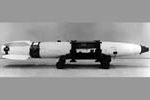 | Date:1961-91 | ~Prod.:2000 | Mass:900kg | Dropcase:380cm X 45cm | Type:TN | Yield:70kt-1Mt |
Tactical air-dropped variable-yield thermonuclear weapon, designed for high-speed subsonic and supersonic low-altitude delivery. It could be dropped from as low as 92m. Two variants: Mod 1 and Mod 2, each with five yield options. It used the 'Tsetse' fission primary tested in shot Cactus of Operation Hardtack I.
|
|
Mark-90
|
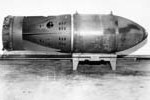 | Date:1952-60 | ~Prod.:225 | Mass:564kg | Dropcase:310cm X 80cm | Type:Fission | Yield:~32kt |
Mk-90 nickname 'Betty' nuclear depth charge developed for anti-submarine warfare (ASW). It utilised a Mark 7 'Thor' variable-yield fission warhead, using a levitated pit and a 92 lens implosion assembly in a depth charge casing. Tested underwater in shot Wigwam in 1955 during Operation Wigwam. It was quickly determined to be impractical for combat use. All units retired by 1960.
|
|
Mark-101
|
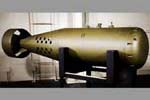 | Date:1958-62 | ~Prod.:2000 | Mass:540kg | Dropcase:229cm X 46cm | Type:Fission | Yield:11kt |
Mk-101 'Lulu' nuclear depth charge ASW (antisubmarine warfare). It utilised a W34 boosted fission implosion warhead identical to the Mk-28 primary. Replaced by the multipurpose B57 during the mid-1960s. The W34 warhead was also used in the Mk-45 torpedo and Mk-105 Hotpoint. A variant of the W34 codenamed 'Peter' was used as the primary for the British thermonuclear weapon Yellow Sun.
|
|
Mark-105
|
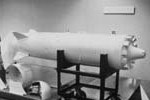 | Date:1958-65 | Prod.: □ | Mass:770kg | Dim.:~300cm X 48cm | Type:Fission | Yield:11kt |
The Mk-105 Hotpoint was an airdropped nuclear bomb, armed with a gas-boosted fission W34 nuclear warhead. The first American nuclear weapon purposely designed for lay-down delivery (acting as a bunker buster), though it could also be utilised as a conventional airburst bomb or as a depth charge. The lay-down mechanism utilised both a retarding parachute to slow its descent, a nose cone that is ejected by an explosive charge prior to impact, and a reinforced steel 'cookie cutter' nose to absorb impact shock.
|
|
B53
|
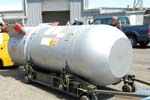 | Date:1958-61 | ~Prod.:340 | Mass:4 Tons | Dropcase:375cm X 130cm | Type:TN | Yield:9Mt |
High-yield thermonuclear weapon utilising a HEU fission primary, and a lithium-6 deuteride fusion secondary. Designed explicitly to combat deeply buried Soviet command-and-control bunkers. Rather than penetrating the ground, its massive yield transmitted a shock-wave deep into the earth collapsing subterranean structures. Two variants: B53-Y1 (dirty) U-238-encased secondary yield 9Mt; B53-Y2 (clean) non-fissile (lead or tungsten) secondary casing, yield classified. The B53 was replaced in the bunker-busting role by the B61 Mod 11. The W53 warhead was used in the Titan II ICBM. TX-43 tested during shot Oak of Operation Hardtack I.
|
|
B57
|
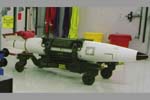 | Date:1963-67 | ~Prod.:3,100 | Mass:227kg | Dropcase:300cm X 37cm | Type:TN | Yield:5-20kt |
Lightweight variable yield thermonuclear weapon designed for high-speed, low-altitude tactical delivery, featuring a highly streamlined body to withstand supersonic flight speeds. Used a 'Tsetse' fission primary. The B-57 weighed 95% less than the WWII 'Fat Man' bomb while offering superior destructive power. Mod 0kt, Mod 1-2 10kt, Mod 3-4 15kt, Mod 5 20kt. The hydrostatically fused ASW version of the B-57 replaced the Mk-101 Lulu.
|
|
B61
|
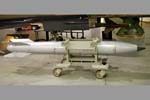 | Date:1968-Present | ~Prod.:3,155 | Mass:~350kg | Dropcase:350cm X 33cm | Type:TN | Yield:0.3-400kt|
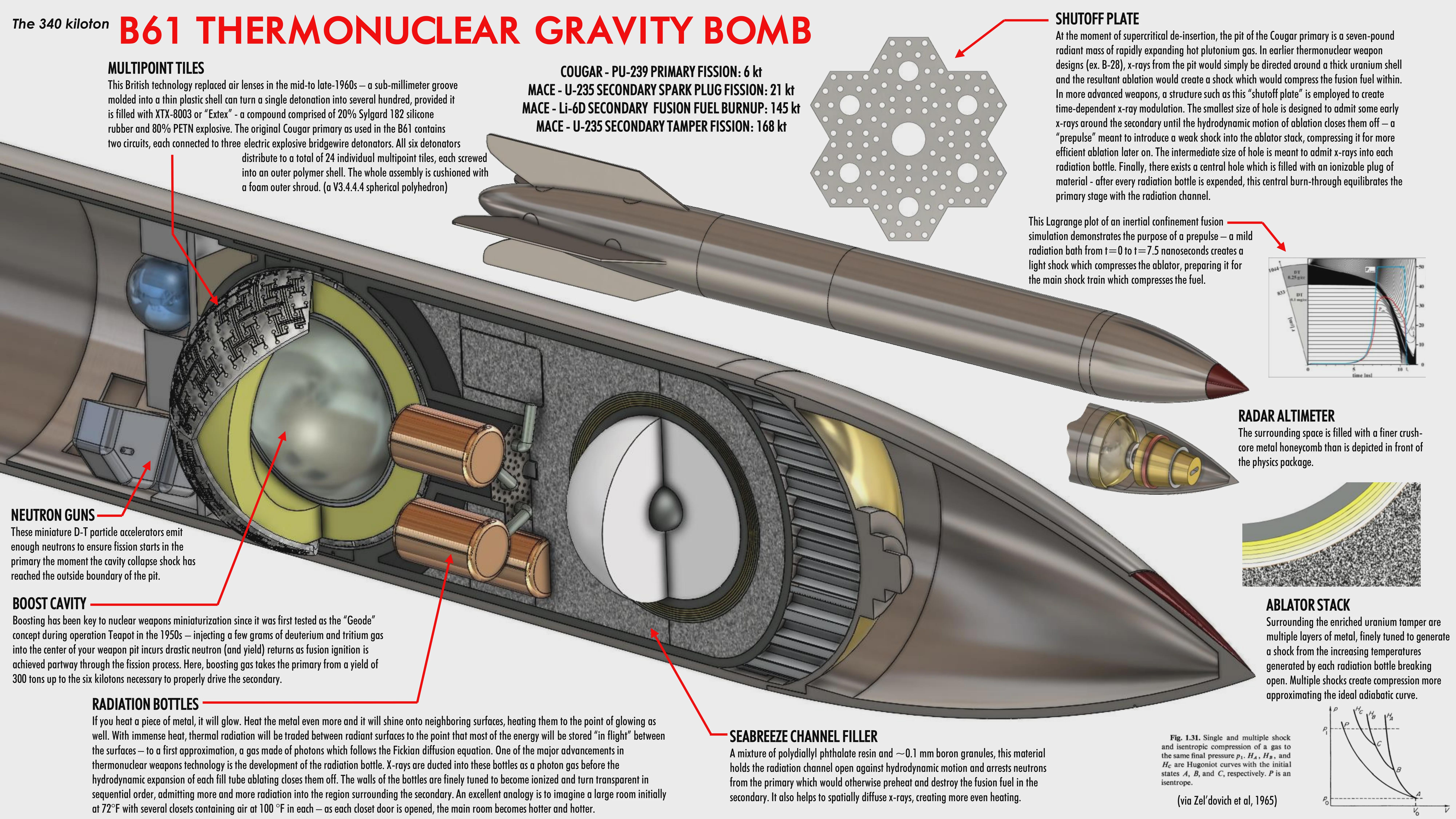
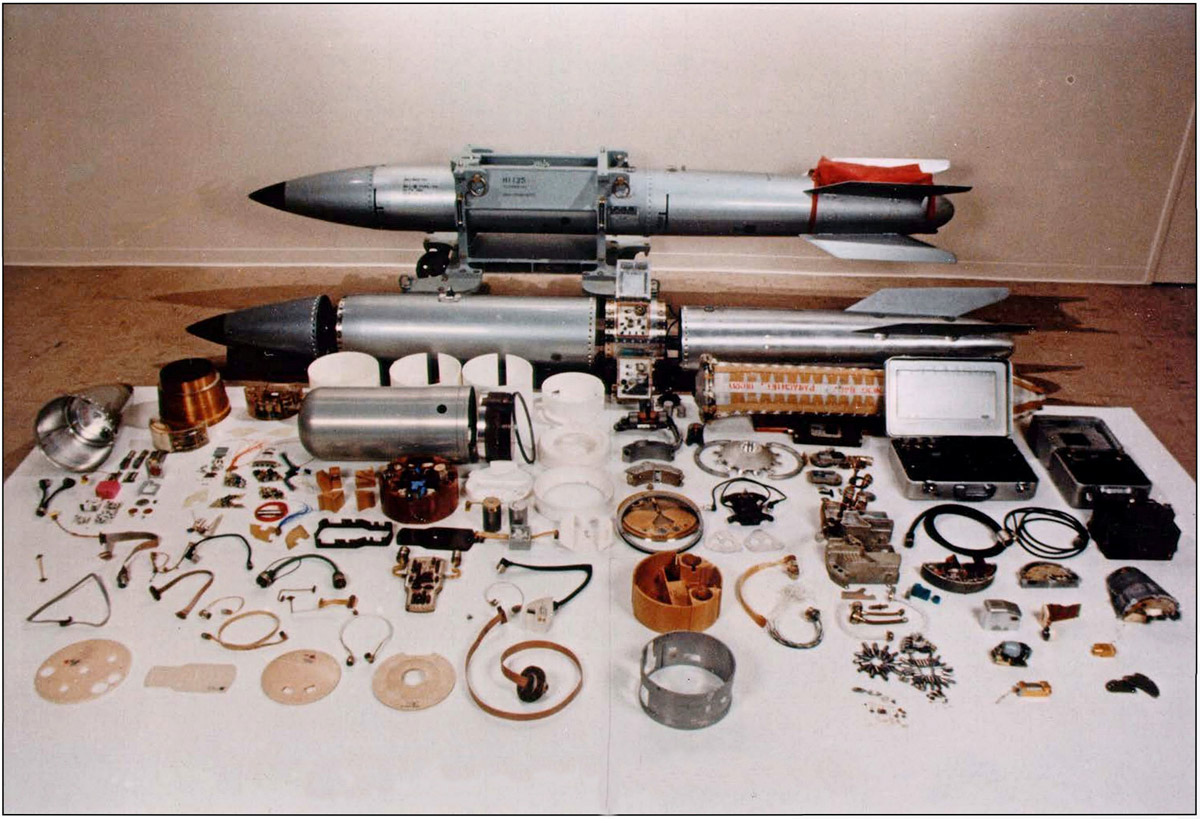
Multi-purpose thermonuclear variable yield tactical/strategic gravity bomb, designed for supersonic delivery. Fourteen variants, each using the same physics package but with different yield options. First deployed in 1968, the B61 has undergone multiple modifications to update its safety, security, and operational capabilities. Mod 11 is a hardened penetration bomb with a reinforced casing and a delayed-action fuse allowing penetration several metres into the ground before detonating, damaging underground fortified structures. |Schematic| |Disassembled|
|
|
B83
|
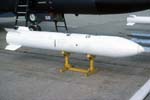 | Date:1983-Present | ~Prod.:650 | Mass:~1 Ton | Dropcase:370cm X 46cm | Type:TN | Yield:low kiloton-1.2Mt |
Two-stage thermonuclear variable yield free-fall gravity bomb with a shock-absorbing steel nose designed for high-speed, low-altitude delivery up to Mach 2.0. Its layout is similar to the smaller B61, with the warhead mounted forward making it nose-heavy. Protected by a Category "D" Permissive Action Link (PAL) and command disablement system (CDS). The B83 remains in service as part of the U.S. 'Enduring Stockpile'.
|
- Warheads
|
W25
|
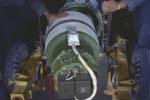 | Date:1954-56 | ~Prod.:3,100 |Type:Fission | Yield:1.7kt |
Low-yield composite pit implosion fission warhead primarily designed for air defense. The first U.S. nuclear weapon to feature a 'sealed pit' design. W25 warhead used in the AIR-2 Genie unguided air-to-air rocket. Tested during shot John of Operation Plumbbob 1957.
|
|
W28
|
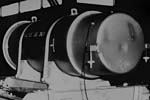 | Date:1955-91 | ~Prod.:2,760 | Mass: □ | Dim.: □ | Type:TN | Yield:35kt-1.45Mt |
Versatile thermonuclear warhead, built around a 'Python' primary stage. The first weapon designed with an integrated external neutron generator for initiation. Five yields: Y1: 1.1Mt, Y2: 350kt, Y3: 70kt, Y4: Fission, Y5: 1.4Mt. W28 used for the Hound Dog and Mace cruise missiles.
|
|
W30
|
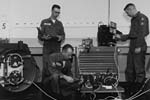 | Date:1959-66 | ~Prod.:300 | Mass:220kg | Dim.:120cm X 56cm | Type:Fission | Yield:0.3kt-4.7kt |
Lightweight 'Boa' fission warhead designed primarily to arm the U.S. Navy's RIM-8 Talos long-range SAM missile, and a Tactical Atomic Demolition Munition (TADM) warhead configuration for the U.S. Army. The TADM's W30 warhead relied on a 3-digit combination lockout control for manual arming.
Two variants; Mod 4 Y1 0.3kt, W30 Mod 4 Y2 0.5kt. The TADM system was during shot Johnny Boy of Operation Sunbeam. Removed from the stockpile by 1966.
|
|
W31
|
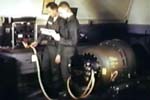 | Date:1960-65 | ~Prod.:300 | Mass:400kg | Type:Fission | Yield:1-40kt |
Highly versatile, multi-purpose variable yield boosted implosion type fission nuclear warhead. Deployed as: Nike Hercules SAM, MGR-1 Honest John rocket and W31 atomic demolition munition. Yield variants - 1, 2, 12, 20, 40kt.
|
|
W35
|
| Date:1958 | Prod.: □ | Mass: □ | Dim:Var. | Type:TN | Yield:1.75Mt |
XW-35 was designed from the outset as a thermonuclear warhead for the first generation of ICBMs. Development was driven by the creation of the Atlas ICBM, and when the accuracy of the Atlas was shown to be inferior to predictions the XW-35 design had to be altered to provide higher yields. The XW-35-X1 was probably the device tested in the Koa shot of the Operation Hardtack I 1958. Cancelled 1958 in favor of the W-49 (a modified W28).
|
|
W40
|
| Date:1959-72 | ~Prod.:350 | Mass:175kg | Dim.:81cm X 46cm | Type:Fission | Yield:10kt |
The W40 nuclear warhead was a fusion-boosted fission nuclear warhead. The design utilised the Python primary or fission core used by the B28 bomb, W28 and W49 nuclear warheads. The first production device June 1959, withdrawn in August due to a safety issues, and re-released in September with a temporary fix. A one-point safety problem was discovered in 1960 and a W40 mod 2 with a fix was developed and sent out in December 1963.
|
|
W45
|
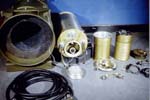 | Date:1962-88 | ~Prod.:2,000 | Mass:68kg | Dim.:69cm X 29cm | Type:Fission | Yield:0.5-15kt |
Multipurpose nuclear fission warhead developed by the Lawrence Livermore National Laboratory (LLNL). It utilised a common 'Robin' fission primary, used in the thermonuclear W38 and W47 weapons. The yields of different W45 versions were 0.5, 1, 5, 8, 10, and 15 kilotons. Fielded in systems like the Little John missile, Terrier SAM, and the Medium Atomic Demolition Munition (MADM). Produced starting in 1962 and kept in the U.S. stockpile until final retirement in 1988.
|
|
W47
|
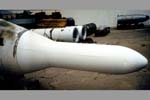 | Date:1960-74 | ~Prod.:1,060 | Mass:330kg | Dim.:120cm X 46cm | Type:TN | Yield:0.6-1.2Mt |
Thermonuclear warhead deployed on the Polaris A-1 and A-2 SLBMs. A major breakthrough in miniaturisation, packing a megaton-class yield into a package small enough to fit inside a submarine missile tube. Tested during 'Frigate Bird' of Operation Dominic I 1962, the only end-to-end live test of a U.S. strategic nuclear missile. Plagued by severe engineering flaws and unreliability. Two mods: Y1 600kt - Y2 1.2Mt. Boosted composite U235/U239 fission primary, LiD secondary.
|
|
W50
|
| Date:1963-91 | ~Prod.:280 | Mass:190kg | Dim.:110cm X 39cm | Type:TN | Yield:60-400kt |
2-stage gas boosted primary and spherical secondary, externally initiated thermonuclear warhead. The boosting gas bottle was mounted outside the case; the electrical system contained two neutron generators. It lacked enhanced safety systems, but featured a Category A PAL. Three yield variants: W50Y1, W50Y2 and W50Y3, yields 60, 200 400 kilotons. Deployment on the Pershing missile, proposed deployment on the Nike Zeus missile. Elements of the W50 secondary used in later weapons such as the W78. Tested during Operations Hardtack I, Dominic and Fishbowl 1958-62.
|
|
W52
|
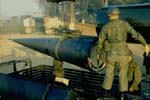 | Date:1962-67 | ~Prod.:300 | Mass:430kg | Dim.:~140cm X 61cm | Type:TN | Yield:200kt |
Compact thermonuclear warhead developed for the MGM-29 Sergeant tactical ballistic missile. It shared its 'Boa' primary fission core with the W30. Three models were produced: the Mod 1, Mod 2, and Mod 3. A warhead test was performed in 1963, which failed, showing that the Mod 1 and Mod 2 versions of the W52 were essentially duds. The Mod 3 was subsequently redesigned.
|
|
W53
|
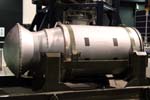 | Date:1962-87 | ~Prod.:65 | Mass:3.69 Tons | Dim.:310cm X 230cm | Type:TN | Yield:9Mt |
High-yield thermonuclear warhead of the Titan II ballistic missile, used the same physics package as the B53 gravity bomb. HEU (Oraloy) fission primary LiD secondary, the physics package was 260cm by 93cm, weighing 2.8 metric tons. The Mark-6 re-entry vehicle (schematic) contained the warhead mounted atop a spacer which was 2.5 m in diameter at the missile interface. The highest yield warhead ever deployed on a U.S. missile.
|
|
W54
|
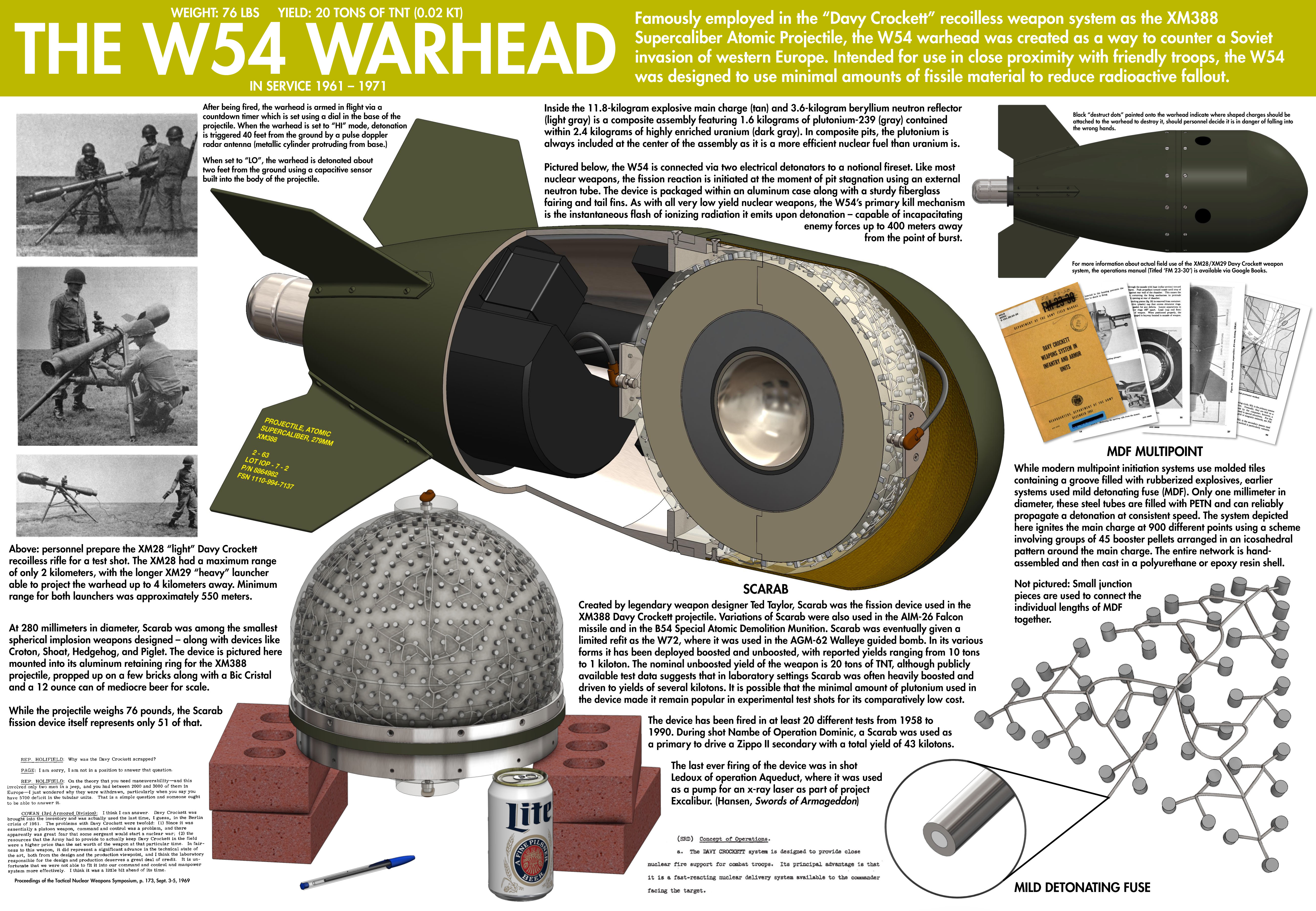
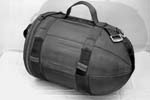 | Date:1961-72 | ~Prod.:2,760 | Mass:Var. | Dim.:288mm | Type:Fission | Yield:0.001-1kt |
Compact tactical implosion warhead containing plutonium-239 as its fissile material, based on the Scarab device. The W54 was the smallest and lightest nuclear warhead ever deployed by the U.S. Three warhead mods: Mod 0 – AIM-4 Falcon air-to-air missile. Mod 1 – Interim warhead for Davy Crockett. Mod 2 – Production Davy Crockett warhead M-388. W54 Special Atomic Demolition Munition SADM (3 mods). Davy Crockett system tested during Operation Sunbeam 1962 observed by Attorney General Robert F. Kennedy. |Schematic|
|
|
W56
|
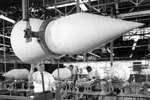 | Date:1963-93 | ~Prod.:1000 | Mass:330kg | Dim.:120cm X 44cm | Type:Yield:1.2Mt |
The W56 (originally Mk-56) was a thermonuclear warhead produced starting in 1963 and saw service until 1993, on the Minuteman I and II ICBMs. The warhead was mounted inside an Advanced Ballistic Reentry System (ABRES) nose cone assembly, AKA the Mark 11 reentry vehicle. The XW-56-X2 was tested in shot Bluestone of Operation Dominic 1962.
|
|
W58
|
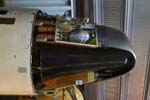 | Date:1964-67 | ~Prod.:1,400 | Mass:117kg | Dim.:102cm X 40cm | Type:TN | Yield:200kt |
Thermonuclear warhead using the boosted Kinglet primary, deployed on the Polaris A-3 SLBM. The nose fairing held three Mk-2 reentry vehicles equipped with warheads. A multiple re-entry vehicle (MRV) system deploys multiple warheads above a single aim-point which then drift apart in an unguided cluster. The warhead with reentry body was 140 cm by 60cm weighing 140kg. The UK modified its Polaris A-3TK missiles with the Chevaline program, replacing the standard MRV payload with two radiation-hardened 225kt warheads,decoys and penetration aids. |Mk-2 RV schematic| |Polaris schematic|
|
|
W59
|
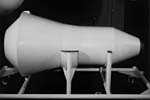 | Date:1962-69 | ~Prod.:150 | Mass:250kg | Dim.:~121cm X 41cm | Type:TN | Yield:800kt-1.2Mt |
Thermonuclear warhead deployed on the LGM-30 Minuteman ICBM, utilised a 'Tsetse' fission primary stage. The warhead was housed inside the General Electric Mk-5 reentry vehicle. Production was short-lived due to reliability and safety concerns. XW-59 tested during shot Questa during Operation Dominic I. The W59 physics package became the basis for the British WE.177 nuclear bomb, the primary air-dropped nuclear weapon for the R.A.F. and Royal Navy.
|
|
W62
|
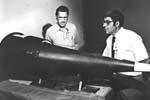 | Date:1970-2010 | ~Prod.:1,725 | Mass:115kg | Dim.:~140cm X 61cm | Type:TN | Yield:170kt |
Deployed on the LGM-30G Minuteman III intercontinental ballistic missile (ICBM. The first U.S. warhead designed for Multiple Independently Targetable Reentry Vehicle (MIRV) systems, the warhead bus carried up to three warheads in Mk-12 reentry vehicles to independent targets. |Schematic|
|
|
W66
|
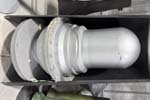 | Date:1975-76 | ~Prod.:80 | Mass:168kg | Dim.:~89cm X 46cm | Type:TN | Yield:2kt |
Low-yield two-stage thermonuclear warhead, the world's first operational enhanced radiation ('neutron bomb') weapon. Specifically designed as the payload for the ultra-high-acceleration Sprint anti-ballistic missile (ABM) system. The W66 was designed to maximise intense neutron flux, damaging incoming ICBMs.
|
|
W68
|
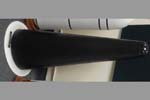 | Date:1970-75 | ~Prod.:5,250 | Mass:68kg | Dim.:~89cm X 46cm | Type:TN | Yield:40kt |
Thermonuclear warhead used on the UGM-73 Poseidon C-3 submarine-launched ballistic missile (SLBM). Housed inside the Mark 3 reentry body, each Poseidon missile typically carried an average of 10 warheads, but could hold up to 14. The design was revolutionary in warhead miniaturisation.
|
|
W70
|
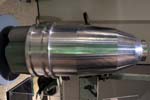 | Date:1973-92 | ~Prod.:1,250 | Mass:120kg | Dim.:100cm X 46cm | Type:TN | Yield:1-50kt |
Two-stage thermonuclear warhead developed for the MGM-52 Lance missile. The Mod 1 and Mod 2 versions of the weapon entered service in 1973. An enhanced radiation Mod 3 version was deployed, though its ER functionality is disputed.
|
|
W71
|
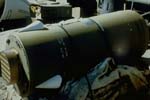 | Date:1975-76 | ~Prod.:30 | Mass:1290kg | Dim.:260cm X 110cm | Type:TN | Yield:5Mt |
High-yield thermonuclear warhead deployed on the LIM-49A Spartan exo-atmospheric anti-ballistic missile (ABM). The warhead was designed to enhance x-ray emission, but minimise fission debris that could blind American space-tracking radars. A W71 prototype was tested in 1971 during Project Cannikin in the world's largest underground nuclear test, on Amchitka Island in the Aleutian Islands off Alaska.
|
|
W76
|
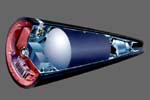 | Date:1978-Present | ~Prod.:3,400 | Mass:95kg | RV-Dim.:130cm X 40cm | Type:TN | Yield:7-100Kt |
Thermonuclear warhead with a D–T gas boosted fission primary. Deployed inside Mk4 reentry vehicles on the Trident II (D-5) SLBMs. Deployed in sets of up to fourteen warheads on a MIRV warhead bus (post-boost vehicle - PBV). Four mods: W76-0: yield 100 kilotons (1978-87). W76-1 Life Extension Program (LEP) yield 90kt (2008-18). W76-2: Low-yield variant fielded late 2019 utilising only the primary fission stage, yield 5-7kt (late 2019). W76/Mk4B: The newest modernisation configuration. The UK operates a design based on the W76 mod-1 under the name 'Holbrook'. |Schematic|
|
|
W78
|
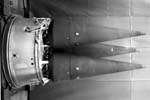 | Date:1979-82 | ~Prod.:1,083 | Mass:~350kg | RV-Dim.:181cm X 51cm | Type:TN | Yield:335-350Kt |
Thermonuclear warhead using a plutonium primary and lithium-6 deuteride fusion secondary. Deployed on LGM-30G Minuteman III land-based ICBMs, housed inside the Mark 12A reentry vehicle. The Minuteman III was originally equipped to carry up to three W78 warheads using a MIRV configuration; modern configurations have been reduced to single-warhead loads (06/2014. |Schematic|
|
|
W80
|
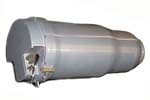 | Date:1976-Present | ~Prod.:2,117 | Mass:~130kg | Dim.:80cm X 30cm | Type:TN | Yield:5-150Kt |
Dial-a-yield low-to-intermediate-yield, two-stage thermonuclear warhead with a tritium-boosted plutonium primary. Designed primarily for use on cruise missiles. Features a category D Permissive Action Link (PAL) coded switch system. The physics package is closely derived from the B61 nuclear bomb design. Three mods: Mod 0 for BGM-109A Tomahawk TLAM-N missile. Mod 1 for for the AGM-86 ALCM and AGM-129 ACM. W80-4: Life Extension Program (LEP). |Schematic|
|
|
W84
|
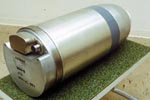 | Date:1983-87 | ~Prod.:250-530 | Mass:~176kg | Dim.:86cm X 33cm | Type:TN | Yield:0.2-150Kt |
Variable yield thermonuclear warhead originally designed for the BGM-109G Gryphon Ground-Launched Cruise Missile (GLCM). Featured insensitive high-explosives in its primary stage, a fire resistant pit, Enhanced Nuclear Detonation Safety (ENDS/EEI) with detonator strong-links, Command Disable, and the most advanced Category G Permissive Action Link (PAL). Retired from the inactive stockpile following the Intermediate-Range Nuclear Forces Treaty in 1987.
|
|
W85
|
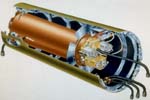 | Date:1983-91 | ~Prod.:215 | Mass:~158kg | Dim.:86cm X 33cm | Type:TN | Yield:0.3-80Kt |
Thermonuclear warhead developed specifically to arm the Pershing II medium-range ballistic missile. Variable yield capability between 0.3, 5, 10, or 80kt. Upon retirement the W-85 was recycled into B-61 Mod 10 bombs.
|
|
W87
|
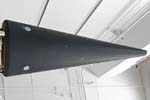 | Date:1986-Present | ~Prod.:535 | Mass:~200-270kg | Dim.:175cm X 55cm | Type:TN | Yield:300-475Kt |
Thermonuclear warhead deployed on the LGM-118A Peacekeeper (MX) ICBM. Each missile carries up to 10 warheads in Mk-21 MIRVs. It featuresd a boosted hollow ellipsoidal plutonium primary stage forward of the secondary stage, to fit the sharp taper of the Mk21 RV. A spherical thermonuclear secondary with a U-238 pusher/tamper and lithium-6 (95% enrichment) deuteride fusion fuel. Extreme durability and physics architecture: Insensitive High Explosives (IHE), Fire-Resistant Pit (FRP), and a modern Mechanical Safing and Arming Device (MSAD). | Schematic |
|
|
W88
|
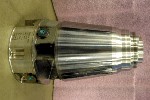 | Date:1989-Present | ~Prod.:400 | Mass:~180kg | RV-Dim.:150cm X 46cm | Type:TN | Yield:475Kt |
Highly miniaturised thermonuclear warhead deployed exclusively on the Trident II (D5) SLBM, carrying up to eight Mk-5 MIRVs. Utilises a boosted 'Kimodo' egg-shaped (prolate spheroid) two-point implosion fission primary, and 'Cursa' spherical secondary. A non-spherical primary is essential for miniturisation, the calculations for this shaped primary are multiple orders of magnitude more dificult. The Mk-5 RV is basically identical to the Mk-21 used with the W87. |Schematic 1| |Shcematic 2|
|
- Artillery Shells
|
W9
|
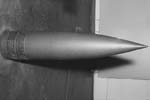 | Date:1952-57 | ~Prod.:80 | Mass:~390kg | Dim.:139cm X 28cm | Type:Fission | Yield:15Kt |
Nuclear artillery shell fired from a special 280 mm howitzer. A gun-type weapon, using around 50kg of HEU in one large ring assembly and one smaller bullet, which was fired down a tube by conventional explosives into the ring assembly to achieve critical mass. The W9 artillery shell was test fired from the 'Atomic Annie' M65 Atomic Cannon in Upshot-Knothole Grable 1953.
|
|
W23
|
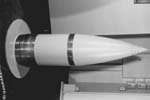 | Date:1956-62 | ~Prod.:50 | Mass:~680-860kg | Dim.:406mm X 16cm | Type:Fission | Yield:15-20kt |
The W23 'Katie' was a 406mm (16-inch) nuclear artillery shell for use on Iowa-class battleships. A gun-type uranium fission weapon derived from the W19 shell. It remains debated whether live W23 shells were routinely carried during active patrols.
|
|
W33
|
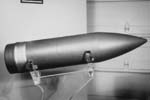 | Date:1955-92 | ~Prod.:2,000 | Mass:~110kg | Dim.:139cm X 28cm | Type:Fission | Yield:5-40Kt |
Nuclear artillery shell designed for use in the 203mm (8-inch) M110 and M115 howitzers. Derived from the Mark 8 nuclear bomb. It used enriched uranium (oralloy) as its fissile material. It used titanium to reduce weight and size; 4 yields (Y1 - Y4) using different internal HEU assemblies, high yield variant may be boosted; 2 mods. Unauthorised firing of the weapon was proventeded by a cover fitted to the rear of the weapon with a combination lock. The cover prevented loading of the weapon into a gun. |Schematic|
|
|
W48
|
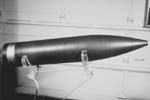 | Date:1963-92 | ~Prod.:1,060 | Mass:~54kg | Dim.:155mm X 64cm | Type:Fission | Yield:100 Tons |
The W48 AFAP (Artillery Fired Atomic Projectile) was a 155mm tactical nuclear artillery shell. Complex engineering was required because the standard linear fission implosion methods require considerable physical space, shrinking a nuclear physics package into a narrow 155mm artillery shell was extremely difficult. The weapon was internally initiated, and had a maximum range of 14km.
|
|
W82
|
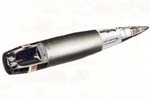 | Date:1956-62 | ~Prod.:50 | Mass:~680-860kg | Dim.:406mm X 16cm | Type:Fission | Yield:15-20kt |
The W82 (AKA XM785) was a low-yield, tactical nuclear artillery shell developed for standard 155mm howitzers. A more advanced, longer-range replacement for the ageing W48. It featured a lightweight titanium body with a bonded copper rotating band to withstand the extreme forces. The development of the W82 was split into two phases: W82-0 (Dual-Purpose) a flexible, 'dual-purpose' warhead. By swapping out internal components it could funcyion as a standard fission explosive or as an enhanced radiation (neutron) weapon. W82-1 Fission-Only.
|
Common nuclear fission primaries
| Model |
Used in these weapons |
RACER IV primary |
TX/Mark 14, TX/Mark 16, Mark 17 |
Python primary |
B28 W28 W40 W49 |
Boa primary |
W30 W52 |
Robin primary |
W38 W45 W47 |
Tsetse primary |
B43 W44 W50 B57 |
Kinglet primary |
W55 W58 |
B61 Family |
B61 W69 W73 W80 W81 W84 W85 W86 |
* Mk/Mark = Designation number |
B = Bomb |
W = Warhead |
TX = Test Experimental |
EC = Emergency Experimental
|
|
|
|











)
 ICBM)